
We spend so much time picking fresh vegetables, choosing healthy cooking oils, and checking nutrition labels. But how often do we stop and think about what we are cooking our food in?
The truth is, your cookware plays a huge role in your daily health. Certain pots and pans can leach synthetic chemicals or heavy metals directly into hot meals. On the other hand, traditional utensils like clay and cast iron can actually add minerals to your food and keep it tasting great.
If you have ever stood in a store wondering whether stainless steel is better than cast iron, or if your non-stick pan is safe—this guide is for you. Let’s break down the most common cooking and eating materials in clear, simple English so you can make the best choices for your kitchen.
Quick At-a-Glance Guide
🎥 Prefer to watch?
This article is also a video on our YouTube channel — tap play, no page reload.
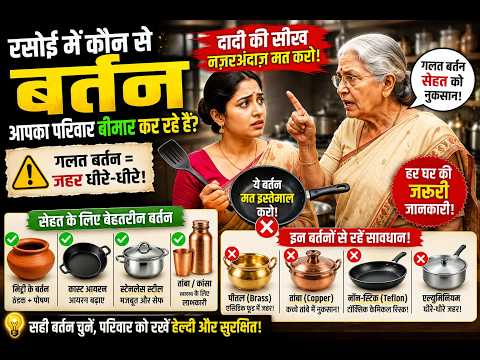
| Material | Safety Rating | Great For | Main Advantage | Main Caution |
|---|---|---|---|---|
| Clay / Earthenware | ⭐⭐⭐⭐⭐ (5/5) | Slow cooking, daal, soups | Keeps 100% of nutrients; cuts acidity | Breaks easily if dropped |
| Tri-Ply Stainless Steel | ⭐⭐⭐⭐⭐ (5/5) | Everyday dishes, boiling, curries | 100% non-reactive and highly durable | Food can stick if not heated right |
| Cast Iron | ⭐⭐⭐⭐☆ (4/5) | Roti, searing, stir-frying | Boosts dietary iron naturally | Avoid cooking acidic/sour foods |
| Glass & Pure Ceramic | ⭐⭐⭐⭐⭐ (5/5) | Baking, reheating, storing leftovers | Completely non-toxic and zero chemical leaching | Vulnerable to thermal shock |
| Silverware | ⭐⭐⭐⭐⭐ (5/5) | Daily dining, feeding infants | Kills bacteria naturally on contact | Expensive to buy |
| Bronze (Kansa) | ⭐⭐⭐⭐☆ (4/5) | Eating meals, serving warm food | Improves digestion; balances acidity | Reacts with lemon and vinegar |
| Copper | ⭐⭐⭐☆☆ (3/5) | Drinking water | Cleans water; kills bad bacteria | Raw copper is toxic with acidic food |
| Non-Stick (Teflon) | ⭐⭐☆☆☆ (2/5) | Eggs, low-oil pancakes | Smooth non-stick surface | Releases harmful fumes if overheated |
| Aluminum | ⭐⭐☆☆☆ (2/5) | Quick boiling (Anodized only) | Heats very fast; lightweight | Raw metal leaches into sour dishes |
1. Clay Pots and Earthenware
Clay pots are probably the single best cooking tool humans ever invented. If you have ever eaten food cooked in a traditional clay handi, you already know how good it tastes.
Why You’ll Love Cooking in Clay:
- Preserves Nutrients: Clay holds heat gently and cooks food slowly. This keeps almost all the natural vitamins and minerals intact.
- Balances Acidic Food: Clay is naturally alkaline. When you cook tomato gravy or spicy curries in it, it balances out the harshness and makes the food much easier on your stomach.
- Uses Less Oil: Steam stays trapped inside the unglazed clay pot, so your meal cooks naturally in its own juices without needing extra oil or butter.
Things to Keep in Mind:
- They are delicate. A sudden drop or a splash of cold water on a burning-hot pot can crack it instantly.
- Always buy simple, unglazed clay. Avoid glossy, brightly painted pots, because cheap ceramic glazes can contain lead.
- Best to Cook: Daal, rice, vegetable stews, slow-cooked curries, and soups.
2. Tri-Ply Stainless Steel
If you want a hassle-free workhorse that lasts a lifetime, stainless steel is your best bet. It is clean, low-maintenance, and practically indestructible.
Why It’s Great for Daily Use:
- Zero Chemical Reactions: Stainless steel never reacts with salt, lemon, tomatoes, or spices. Your food tastes exactly the way it should.
- Easy to Clean: You can scrub it, toss it in the sink, or wash it with regular soap without worrying about damaging a coating.
- Won’t Rust or Leach: Good quality steel doesn’t flake off or chip into your food.
The Downside (and How to Fix It):
- Plain single-layer steel pan bottoms burn food quickly. Always look for Tri-Ply stainless steel (which has an aluminum or copper layer sandwiched between steel to spread heat evenly).
- Food can stick if the pan is cold. Quick trick: Heat your empty steel pan over medium flame for 2 minutes before adding oil. Drop a splash of water in—if it beads up and dances like tiny glass marbles, your steel pan is now naturally non-stick!
- Best to Cook: Everyday curries, tea, boiled milk, rice, and acidic dishes with tomato or lemon.
3. Cast Iron Cookware
Cast iron pans are heavy, tough, and only get better the more you use them. A good cast iron skillet can literally be passed down to your children.
Why You Should Use It:
- Adds Extra Iron to Meals: When you cook in raw cast iron, tiny trace amounts of healthy iron transfer into your food—a simple, natural boost if you have mild iron deficiency.
- Natural Non-Stick: As you cook with oil over time, the pan builds up a smooth, shiny dark layer (called seasoning). This acts like a natural non-stick surface without synthetic chemicals.
- Handles High Heat: Cast iron stays hot for a long time, making it unbeatable for getting a nice golden crust on food.
Things to Watch Out For:
- Avoid Sour Foods: Tomatoes, vinegar, tamarind, or lemon juice will wear off the pan’s natural seasoning and give your food a sharp metallic taste.
- Cast iron will rust if you leave it wet in the sink. Always dry it immediately on the stove and rub a tiny drop of oil over it before storing.
- Best to Cook: Flatbreads (roti, paratha, dosa), stir-fried vegetables, and deep-frying.
4. Glassware & Pure Ceramic
Glass and high-fired ceramic dishes are fantastic choices if you want a clean, 100% non-metallic kitchen option.
What Makes Them Great:
- Purity: Glass and ceramic do not leach anything into your food—no chemicals, no metal taste, and zero odor absorption.
- Perfect for Storage: You can cook, serve, and store leftovers in the fridge using the exact same dish.
- Acid-Proof: Tomatoes, citrus dressings, and pickles can sit in glass containers indefinitely without any issue.
The Downside:
- Glass will shatter if dropped or if you subject it to thermal shock (like taking a cold dish from the fridge and placing it directly onto a hot stove).
- Best to Use: Microwave reheating, oven baking, and storing leftovers.
5. Silverware
Eating with silver spoons and plates used to be a sign of royalty, but there is real science behind why it was so popular.
Benefits of Silver:
- Kills Microbes: Silver has natural antibacterial and antiviral properties. Bacteria simply cannot thrive on a clean silver surface.
- Safe for Babies: Because it is non-toxic and self-sanitizing, silver bowls and spoons are historically the safest choice for feeding babies.
- Cooling Nature: Traditional medicine notes that silver has a mild cooling effect on the body.
The Downside:
- It is an expensive investment.
- Silver darkens over time when exposed to air or sulfur-rich foods like eggs and mustard, though it polishes back up easily.
- Best to Use: Eating daily meals, feeding toddlers, and serving water or sweets.
6. Bronze (Kansa) and Brass (Pital)
Bronze and brass are traditional metals that have been used across Asia and Europe for centuries for serving and cooking.
Why They Are Useful:
- Helps Digestion: Eating off a genuine bronze plate (Kansa) helps balance your body’s pH level and aids smooth digestion.
- Good for Serving: Brass and bronze retain heat well, keeping your food warm right through dinner.
Important Warnings:
- Never cook sour food in unlined brass or bronze. Tomatoes, yogurt, lemon, and vinegar react badly with copper alloys and can create toxic compounds.
- Cooking pots made of brass must always have a fresh inner lining of pure tin (traditionally called kalai) to keep food safe.
- Best to Use: Serving cooked meals, eating daily food, and drinking water.
7. Copper Vessels
Copper is famous for storing drinking water, but using it for actual cooking takes extra care.
The Good Side:
- Storing plain water in a clean copper vessel overnight (for about 8 hours) kills harmful bacteria and charges the water with trace minerals that support your immune system.
The Risks:
- Never cook food directly in raw copper. Salt and acids turn copper into a toxic substance that causes stomach cramps and nausea.
- Only buy copper cooking pots that feature a heavy inner lining made of stainless steel or pure tin.
- Best Use: Storing plain drinking water overnight (for morning consumption).
8. Non-Stick Cookware (Teflon)
Non-stick pans are found in almost every modern kitchen because they are so easy to clean, but they come with real limitations you should know about.
The Advantages:
- Food glides right off, meaning you can cook with barely any oil or butter.
- Great for delicate dishes that stick easily.
The Risks You Should Know:
- Overheating Releases Fumes: When non-stick coatings reach high temperatures (above $260^\circ\text{C}$ / $500^\circ\text{F}$), the chemical coating starts breaking down, releasing odorless, toxic fumes.
- Scratches Mix into Food: Using metal spoons or hard scrubbers creates micro-scratches, causing tiny plastic flakes to mix directly into your meals.
- They don’t last long. Most non-stick pans need to be thrown away after 1 to 2 years.
- Best to Cook: Eggs on low heat, delicate fish, and low-oil pancakes.
- Rule: Never use metal utensils on them, and throw them away as soon as the surface scratches.
9. Aluminum Cookware
Aluminum pans heat up almost instantly and are very affordable, but raw aluminum carries clear health drawbacks.
The Difference Matters:
- Raw Aluminum (Avoid): Soft, un-coated aluminum dissolves easily when exposed to hot, acidic foods like tomato sauce or lemon juice. Long-term accumulation of leached aluminum is not good for your health.
- Hard-Anodized Aluminum (Safe): Hard-anodized aluminum goes through an electrochemical bath that seals the surface. This makes it dark, hard, scratch-resistant, and non-reactive with food.
- Bottom Line: Avoid cheap raw aluminum pans. If you like how fast aluminum cooks, buy Hard-Anodized Aluminum instead.
Simple Rules for a Safer Kitchen
- Keep Sour Foods Away from Reactive Metals: Never cook tomatoes, lemons, tamarind, or vinegar in raw cast iron, unlined copper, unlined brass, or raw aluminum.
- Invest in Everyday Safe Basics: Get two good Tri-Ply Stainless Steel pots and one Cast Iron skillet. They will handle 90% of your daily cooking safely without any hassle.
- Inspect Your Pans Periodically: If a non-stick coating is scratched, or an aluminum pan looks pitted and peeled, toss it out immediately.
Common Questions (FAQs)
What is the single best pan for daily cooking?
A Tri-Ply Stainless Steel pan is the best all-rounder. It is completely safe, does not react with any ingredients, can handle high heat, and lasts for decades.
Is it safe to drink copper water every single day?
Drinking 1 to 2 glasses of copper-stored water first thing in the morning is great for health. However, you should not drink copper water all day long, as too much copper can build up in your liver over time.
How do I stop food from sticking to stainless steel?
Preheat the empty steel pan over medium heat for 2 minutes before adding oil. Drop a few water droplets onto the pan—if they dance around like tiny beads, your pan is at the perfect temperature to be naturally non-stick.